As California’s specialty crop economy evolves, helping growers transition, rather than simply endure, will be key to preserving farms for the next generation
As California’s specialty crop economy evolves, helping growers transition, rather than simply endure, will be key to preserving farms for the next generation
Ann Carriere
California perennial crop growers continue to face an era of market contraction. Over several years, a large number of acres were left unharvested across the California wine industry. The almond industry faces its fourth consecutive year of acreage reduction as well. Though markets for specialty crops rebound, they do not return unaltered.
Cycles of overproduction and periods of contraction often result in structural shifts, such as land ownership consolidation. As perennial crop industries adapt to a new economic reality, dictated by changing global markets and resource scarcity, the question of agricultural transitions and land tenure is a vital one.
Costly Transitions, Limited Support
Farmers are no strangers to boom-and-bust business, particularly in high-value markets like nuts and wine grapes. However, the current cycle stands apart from historic trends. Contemporary California growers must weather a new and unprecedented storm of regulatory compliance, water shortages, increased labor costs, soaring fuel prices and global competitors, alongside saturated markets.
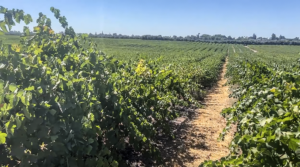
Transition costs often outweigh revenue from diversifying income streams through alternative crops. It is expensive to remove a perennial system and the up-front establishment and borrowing costs of replanting, with anywhere from a five- to 10-year establishment period before commercial productivity, are significant. From personal experience, it is no small task to acquire equipment for vineyard removal, along with the time and labor needed to do so. Separating the vine from the trellising system and finding a recycling method for both materials that is not prohibitively expensive proves an additional challenge. Alternative productive uses cannot be considered until this immediate obstacle is resolved, and often this process of removal and recycling can take several growing seasons.
Further, the multigenerational development of farming expertise in a particular cropping system, along with investment in highly specialized equipment, does not translate wholesale to a different one. Though the extent of abandoned acreage, as well as net acreage loss, has made the need for industrywide transitions clear, the practical economic challenges in doing so remain unaddressed.
Expanding Cost-Share Programs
Given the increasing premium on land and water in California, it is unlikely the specialty crop market will return to “golden era” market conditions seen through the 2010s. Embracing this reality will help shift the conversation away from outdated market expectations toward more proactive transition strategies.
The most immediate and intensive challenge for perennial growers is overproduction and, consequently, unprofitable acreage. California’s current policy tools point elsewhere. Assembly Bill 732 penalizes neglected plantings that harbor pests, and the Multibenefit Land Repurposing Program funds the repurposing of irrigated land to reduce groundwater use. Neither addresses the viability of productive transitions as opposed to farmland conversion.
Economically punitive bills like AB 732 might even prompt acreage selloffs for farmers already tallying their losses. A more secure, statewide cost share removal program with up-front funding, interim income stipends and equipment retrofitting plans would improve the feasibility of orchard or vine removal as a primary approach to mitigate economic losses while still retaining land ownership and corresponding asset appreciation.
Financing the Transition
Most agricultural transition finance strategies are currently geared toward the shift from conventional to more regenerative agricultural production. Financial products like green loans, climate-smart grant programs and private credit provide incentives for on-farm management transitions to organic production. However, meeting climate realities does not necessarily address broader market trends and the vulnerability they create for farmers in the specialty crop business. Transition financing that accounts for cash flow gaps and new risk profiles could provide a clear off-ramp for farmers looking to make lasting changes and long-term productivity gains within California perennial agriculture.
Private lenders could support transitions to an annual or diversified cropping system by providing interest-only or zero-payment periods within the window of transition. This would effectively align loan terms and debt service with a high crop productivity lag. Risk associated with transitions in private lending structures could be mitigated through participation loans and government guarantees. Up-front state subsidies in initial cost share removal, alongside adapted financial tools for transitioning perennial systems specifically, would create a more dependable blended capital strategy to help de-risk this necessary change.
The future of rural livelihoods and stable land ownership relies on subsidizing transition instead of stagnation.
Ann Carriere
Preserving Land Ownership Through Transition
Ultimately, transition strategies will only lead to long-term market stability in California specialty crops if they prioritize the preservation of farm equity to support rural livelihoods. Punitive policies and a lack of cohesive, statewide infrastructure to support growers facing market changes may further exacerbate industry consolidation as small-scale producers, already strapped for liquid assets, are pushed to sell land.
Consolidation, a potential consequence of market evolution without intentional transition planning, raises land values and increases parcel scale, creating barriers to entry for farmers seeking to secure land tenure. Retained ownership is the key to preserving accumulated land equity, a stronghold for intergenerational succession and future market resilience.
In the face of continued overproduction and acreage unprofitability, it is crucial to look beyond short-term stopgaps and develop a cohesive, long-term economic transition for California perennial systems. These strategies must focus on the operational realities of a transitional agricultural economy and help mitigate the significant financial barriers farmers face. The future of rural livelihoods and stable land ownership relies on subsidizing transition instead of stagnation.
Ann Carriere is a master’s student in geography at the University of California, Davis, researching land ownership and market transitions in California’s perennial cropping systems. She is a fifth-generation Californian from a farming family.
Frequently asked
Why are transitions from perennial systems costly?
Transition costs often outweigh revenue from diversifying income streams through alternative crops. It is expensive to remove a perennial system and the up-front establishment and borrowing costs of replanting, with anywhere from a five- to 10-year establishment period before commercial productivity, are significant. From personal experience, it is no small task to acquire equipment for vineyard removal, along with the time and labor needed to do so. Separating the vine from the trellising system and finding a recycling method for both materials that is not prohibitively expensive proves an additional challenge. Alternative productive uses cannot be considered until this immediate obstacle is resolved, and often this process of removal and recycling can take several growing seasons.
What policy tools currently fall short?
The most immediate and intensive challenge for perennial growers is overproduction and, consequently, unprofitable acreage. California’s current policy tools point elsewhere. Assembly Bill 732 penalizes neglected plantings that harbor pests, and the Multibenefit Land Repurposing Program funds the repurposing of irrigated land to reduce groundwater use. Neither addresses the viability of productive transitions as opposed to farmland conversion.