Keeping California’s farms productive will require more than new water supplies. It will require unprecedented collaboration.
Geoff Vanden Heuvel has played a leading role in bringing stakeholders together as the Sustainable Groundwater Management Act (SGMA) reshapes California’s water future. Vice chair of the Water Blueprint for the San Joaquin Valley, a collaborative effort to secure the region’s long-term water future, Vanden Heuvel calls the blueprint a “coalition of the willing” made up of water agencies, commodity groups, cities, towns and interested organizations.
With that in mind, a different conversation has been starting to take shape. Instead of individual agencies or regions solving increasingly complex water challenges on their own, leaders across the San Joaquin Valley are thinking more about what it would look like to plan for water together.
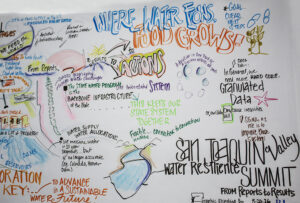
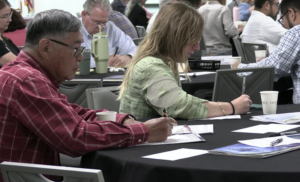
That shift was at the center of two days of discussions during the Water Resilience Summit held May 20-21, 2026 at Fresno State where growers, researchers, water managers, commodity organizations and state officials identified shared priorities and discussed what a coordinated strategy could look like for the valley. The conversations reflected a recognition that while perspectives differ, the long-term goals are remarkably similar: protecting agriculture, strengthening rural communities, improving water reliability and creating enough certainty for future investment.
A Coalition Born Out of Necessity
The Water Blueprint formed after the passage of SGMA, when water leaders realized individual districts could no longer address groundwater challenges on their own.
“SGMA represented an existential threat to the entire San Joaquin Valley,” Vanden Heuvel said. “There was a need for a unified organization that sought to represent the interests of the entire San Joaquin Valley.”
“SGMA represented an existential threat to the entire San Joaquin Valley,” Vanden Heuvel said. “There was a need for a unified organization that sought to represent the interests of the entire San Joaquin Valley.”
Geoff Vanden Heuvel
Before SGMA, most water districts focused primarily on their own service areas.
“Up until SGMA was passed, folks just put wells in and pumped water, and they really didn’t know what their neighbors were doing,” he said.
That approach has left the valley with a tall order to fill. Vanden Heuvel said the San Joaquin Valley faces an annual water supply deficit of 2 million to 3 million acre-feet, and its critically overdrafted basins must reach groundwater sustainability under SGMA by 2040.
He added that land subsidence is adding urgency because of the damage it is causing to water infrastructure.
For the Blueprint, success means narrowing that deficit.
“The Blueprint needs to be successful in providing assistance to basically capture more water,” he said. “Can we close the whole gap? We’re going to try, but we’ve got to do what we can.”
Strength in Numbers
Vanden Heuvel said regional collaboration matters most because the San Joaquin Valley lacks the political weight of California’s larger urban regions.
“There’s 20-plus million people in Southern California, and there’s 2 million people in the valley,” he said. “If we don’t act as a unified body, we really have a hard time getting any kind of attention politically in the state.”
Laura Ramos, director of the California Water Institute at Fresno State, sees the same dynamic playing out between growers and agencies.
“They shouldn’t see each other as separate or against each other,” she said. “The groundwater sustainability agencies want a vibrant community, a vibrant economy, a vibrant and sustainable environment. If they’re able to talk together, they’ll realize that they want the same goals.”
Ramos said it’s equally important to bring a range of agricultural voices into the room.
“You can’t compare a small farmer to a large farmer, and you can’t compare row crops to orchards,” she said. “It’s important that they are here to say, ‘Our farms are struggling. The economy’s going to struggle because of it.’ We can speak for them, but it is a lot more valuable when they’re speaking for themselves.”
A Shrinking Safety Net
For the California Department of Water Resources, the conversation goes beyond managing today’s supplies. According to Joel Metzger, deputy director of Statewide Water Resources Planning and Enterprise Project Management, California is entering a period in which old assumptions about water availability no longer apply.
“Agriculture is facing some of the biggest challenges that it ever has in the San Joaquin Valley,” Metzger said.
“Agriculture is facing some of the biggest challenges that it ever has in the San Joaquin Valley,” Metzger said.
Joel Metzger
The state’s largest reservoir has always been the Sierra Nevada snowpack, but changing weather patterns are shrinking that natural storage.
“If we can’t count on that snowpack, then we are going to be short on water,” Metzger said. “In fact, we really already are short on water.”
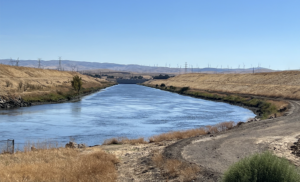
Subsidence from years of groundwater overdraft has compounded the problem, damaging major conveyance systems and limiting how much water the state can move.
“When you’re not able to move as much water, that means that folks are not going to get the supplies that they need,” he said.
Senate Bill 72 directs the California Department of Water Resources to modernize the California Water Plan and identify an interim target of 9 million acre-feet of additional water supply, storage or conservation by 2040. Metzger said the plan will lean heavily on public input rather than top-down decisions.
“We are going to be engaging all across California over the next couple of years, making sure that people’s voices are heard, we understand their goals, and we understand their challenges and opportunities,” he said.
From Problems to Proposals
Organizers built the summit around solutions rather than a running list of grievances. Ramos said she hopes the discussions will produce a unified message for state and federal leaders, resulting in a letter outlining the San Joaquin Valley’s shared water priorities across its diverse regions.
“Most of the time we’re talking about challenges, and these are my problems,” she said. “I want to bring solutions and say, ‘These are the challenges that the group identified, and these are the solutions that the group identified.’”
She also sees the collaboration bringing about new research priorities as farmers raise practical questions about groundwater recharge, crop impacts, soil health and emerging technologies.
“Come to California Water Institute and tell us what some of the answers are that you need that impact your crop or your soil or your water or technology that can help, so that we can help bring some solutions toward that,” Ramos said.
While policymakers debate long-term planning, growers are making decisions today that will shape their operations for decades. For Daniel Hartwig, a Fresno County grower and principal water resources specialist at Provost & Pritchard Consulting Group, the biggest obstacle isn’t water scarcity itself, it’s not knowing how much he’ll have down the road.
“If you don’t have an idea of what your water supply looks like by the time we get to 2040, planning a long-term crop like almonds is challenging,” Hartwig said. “If you don’t know what your GSP says and have an idea what that long-term water supply is, it’s really hard to plan and maximize your acreage and maximize your production.”
It can take years for permanent plantings like almonds and pistachios to pay off, and Hartwig said that kind of investment requires a baseline level of certainty he doesn’t currently have. That’s the same uncertainty Vanden Heuvel and Metzger are describing from the policy side, just felt at the scale of a single operation instead of an entire basin.
Success would be if we actually come out of here with a plan and provide certainty for growers. — Daniel Hartwig, Fresno County grower
What Success Looks Like
The region needs a unified position to gain political traction, and Hartwig needs that same clarity to decide what to plant next. He appreciated that the summit pushed past listing problems toward an actual action plan.
“It was really important to actually see ideas rise to the top and then people try to build collaborative ideas around those and really try to come up with implementation of all those ideas as well,” he said.
Hartwig also valued the range of perspectives in the room.
“There’s no exclusivity on good ideas,” he said. “It’s good to have differing viewpoints there when folks can share that.”
Increasing water supply remains the priority, but participants kept circling back to a harder, less tangible requirement: the idea of alignment. Metzger said even narrow agreement among stakeholders could change the state’s ability to respond.
“If there were just three things or five things that the different perspectives in the valley could get behind and say, ‘This is what we need, and this is what we’re demanding of the state government and the federal government,’ I think that would be what success looks like,” he said.
The goal comes as the San Joaquin Valley continues working to address a multimillion-acre-foot water deficit. Vanden Heuvel pointed to the Legislature’s unanimous passage of the mandate for DWR to identify 9 million acre-feet of new supply as evidence that a shift is already underway.
“Just a recognition that we need more supply from the state is a paradigm shift,” he said.
Whether that shift translates into the kind of unified action Metzger described remains uncertain. But for Hartwig, the measure of success is more immediate, and it’s the one growers across the valley are also waiting for.
“Success would be if we actually come out of here with a plan and provide certainty for growers,” he said. “Have some degree of certainty where everybody knows what the rules are that they’re playing by and not have those rules change willy-nilly, so again you can make long-term decisions for your family and your farm.”
Frequently asked
What is the San Joaquin Valley’s estimated annual water supply deficit?
That approach has left the valley with a tall order to fill. Vanden Heuvel said the San Joaquin Valley faces an annual water supply deficit of 2 million to 3 million acre-feet, and its critically overdrafted basins must reach groundwater sustainability under SGMA by 2040.
What interim target did Senate Bill 72 direct the Department of Water Resources to identify?
Senate Bill 72 directs the California Department of Water Resources to modernize the California Water Plan and identify an interim target of 9 million acre-feet of additional water supply, storage or conservation by 2040. Metzger said the plan will lean heavily on public input rather than top-down decisions.