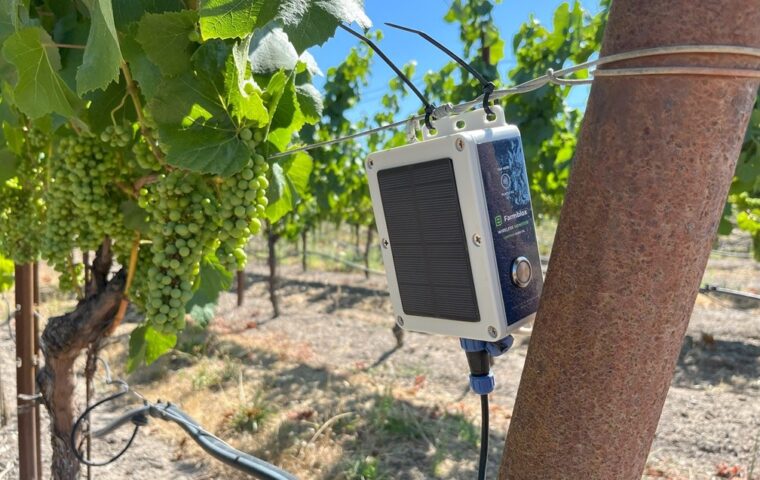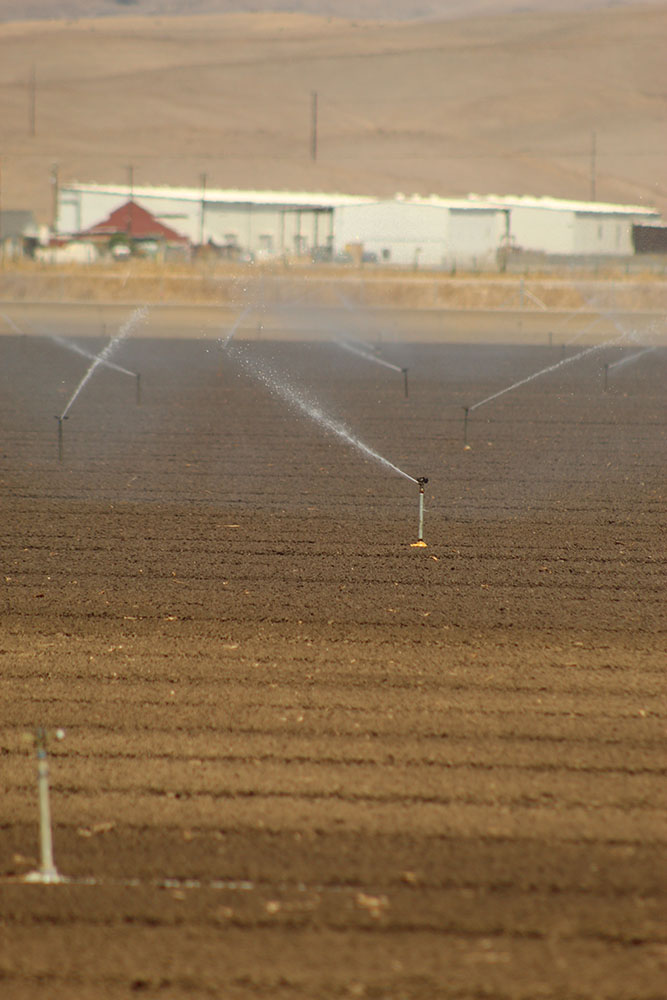
As California’s Sustainable Groundwater Management Act reshapes agricultural water use, growers are looking beyond simply replacing lost groundwater
Historically, the conversation around California water has centered on scarcity, but today, the economics of it all has become much more prevalent.
As the Sustainable Groundwater Management Act (SGMA) moves from planning into implementation, large commercial growers are no longer asking whether groundwater pumping will decline. Instead, they are asking how to replace those supplies without sacrificing profitability. The answer is proving to be far more complex than drilling a new well or purchasing additional water.
Groundwater recharge, water banking, recycled water partnerships, improved conveyance systems and groundwater markets are all becoming part of the equation. Yet new research suggests another strategy deserves equal attention: producing more economic value with less water.
That means for many operations, maximizing the return on every acre-foot may ultimately prove more important than replacing every acre-foot that is lost. That distinction is significant because even aggressive investments in new water supplies are unlikely to fully offset SGMA’s impact.
A June 2026 report from the PPIC Water Policy Center, SGMA-Ready Crops as a Low-Water Alternative to Fallowing, notes that groundwater sustainability efforts could reduce irrigated acreage in the San Joaquin Valley by as much as 900,000 acres, roughly 20% of today’s irrigated farmland, if additional water supplies fail to materialize. Even under optimistic scenarios that significantly expand groundwater recharge and other new supplies, approximately 500,000 acres are still expected to transition out of fully irrigated production.
As a result, groundwater replacement is no longer simply an engineering challenge but is becoming a capital allocation challenge.

Water Productivity is Becoming the New Benchmark
Historically, agricultural investments focused on maximizing yield. Under SGMA, many growers are beginning to evaluate investments differently. Rather than asking how many tons or boxes a field can produce, they are increasingly asking how much revenue each acre-foot of water can generate.
The PPIC report describes this as water productivity, economic return per unit of water applied.
That shift in thinking changes nearly every management decision, from crop selection and irrigation timing to groundwater recharge and land use planning.
That perspective also helps explain why replacing groundwater will require more than simply developing additional supplies.
Josué Medellín-Azuara, professor of civil and environmental engineering at the University of California, Merced, and an agronomist with the UC Merced Agricultural Experiment Station, noted growers will increasingly be forced to evaluate crops based on the financial return generated from every unit of water.
Medellín-Azuara said feed crops such as alfalfa, irrigated pasture and corn silage face the steepest reductions in irrigated area because they generate the lowest returns per unit of water applied.
“Tree and vine crops, which are more capital intensive, will likely see smaller reductions,” he said.
His research indicates those economic pressures could reshape California’s agricultural landscape. Lower-value forage crops are expected to lose irrigated acreage as groundwater allocations tighten, while permanent crops may continue to justify irrigation because they generate substantially greater returns on every acre-foot of water applied.
Those decisions extend well beyond individual operations.
What’s more, California’s dairy industry depends heavily on locally grown corn silage, which cannot be transported economically over long distances because of its moisture content. As irrigated forage acreage contracts, ripple effects could spread throughout one of the state’s largest agricultural sectors.
The economics of groundwater replacement, therefore, are increasingly tied to the economics of crop choice.
“On a cost per-acre-foot basis, on-farm recharge is one of the most cost-effective options where localized physical and institutional conditions allow it,” Medellín-Azuara said.
Josué Medellín-Azuara
Recharge Remains One of the Strongest Investments
Among the strategies available today, groundwater recharge continues to offer one of the clearest returns where geography and infrastructure allow. After all, instead of constructing expensive new storage facilities, growers capture excess surface water during wet periods and allow it to infiltrate underlying aquifers. Because recharge often utilizes existing farmland and natural storage underground, it can provide additional supplies at relatively low cost compared with major infrastructure projects.
“On a cost per-acre-foot basis, on-farm recharge is one of the most cost-effective options where localized physical and institutional conditions allow it,” Medellín-Azuara said. “Building and dedicating groundwater basins can be more costly and less scalable in wet years than in-farm recharge.”
He noted that some irrigation districts have introduced financial incentives to encourage recharge. In the Tulare Lake Basin, growers have received between $30 and $100 per acre-foot for water recharged, while California’s Pajaro Valley offers rebates that offset nearly half of local groundwater pumping fees for water returned to the aquifer.
Caitlin Peterson, associate center director and research fellow at the PPIC Water Policy Center, notes that California possesses its largest water storage reservoir beneath its feet.
“We have more storage underground than in all of our surface reservoirs combined,” Peterson said.
Caitlin Peterson
“We have more storage underground than in all of our surface reservoirs combined,” Peterson said. “Groundwater recharge is hugely important. It’s also low cost relative to big infrastructure and can be implemented right away.”
Recharge, however, is only part of the solution. The PPIC report notes that Groundwater Sustainability Plans collectively anticipate adding roughly 1 million acre-feet of recharge annually. Even if those goals are achieved, substantial acreage will still require new management strategies because replacement supplies alone cannot eliminate the groundwater deficit.
Looking Beyond Replacement Water
One of the report’s more surprising conclusions is that replacing groundwater does not always require replacing water.
For years, fallowing has been viewed as the default response when irrigation supplies decline. Yet researchers found that widespread fallowing carries its own economic costs. Idle land generates no revenue while continuing to require weed control, pest management and dust mitigation. It may also create environmental concerns, including increased dust emissions and localized heat effects.
Perhaps more surprising, bare fields are not especially efficient at capturing rainfall. The report found fallowed ground can lose 60% to 90% of winter rainfall to evaporation before late March, leaving relatively little water available for groundwater recharge. In many years, only a small fraction of rainfall ultimately reaches underlying aquifers.
Instead, PPIC researchers argue growers should evaluate what they call SGMA-ready crops, primarily winter grains and forage crops managed under low-water conditions.
Unlike permanent fallowing, these crops can continue generating revenue while requiring relatively little supplemental irrigation. They also offer flexibility. Depending on rainfall and market conditions, growers may harvest forage, produce grain, terminate the crop early during dry years or even convert the same fields to groundwater recharge during exceptionally wet winters.
Researchers found another advantage as well. When managed using best practices, including early planting, limited establishment irrigation and early forage harvest, winter grain crops generally use little more water than natural rainfall during much of the growing season. They may even improve groundwater recharge in wetter years while producing marketable crops instead of idle ground.
For growers evaluating long-term investments, that changes the conversation. Rather than viewing groundwater replacement solely as a search for additional supplies, the challenge increasingly becomes identifying farming systems capable of generating stronger financial returns from a smaller water budget.
The name of the game is flexibility. Growers who are nimble, or who have the scale and the capacity to take some hits or adjust their crop portfolio, will probably do fine. — Caitlin Peterson, PPIC Water Policy Center
Diversification Will Separate the Winners from the Rest
No single strategy will allow California agriculture to replace all of the groundwater being lost under SGMA. The growers most likely to succeed will be those who build diversified water portfolios rather than relying on any one source.
That portfolio may include groundwater recharge during wet years, surface water purchases when available, groundwater banking agreements, recycled water partnerships and participation in emerging water markets. It may also involve changing crop rotations, introducing lower water crops on selected acreage or retiring land that can no longer generate acceptable returns.
“The name of the game is flexibility,” Peterson said. “Growers who are nimble, or who have the scale and the capacity to take some hits or adjust their crop portfolio, will probably do fine.”
That flexibility is becoming increasingly valuable because no two groundwater basins face the same challenges.
Some regions have abundant opportunities for recharge because they possess permeable soils and access to seasonal floodwater. Others lack suitable geology or infrastructure, making recharge significantly more expensive or impractical. Likewise, operations producing permanent crops face a much different financial equation than growers with annual cropping systems that can be adjusted from year to year.
Those regional differences mean there is no universal playbook for groundwater replacement. What works in the Sacramento Valley may not pencil out in the southern San Joaquin Valley.
Water Markets could Improve the Economics
As groundwater becomes more tightly managed, economists expect water markets to play a much larger role in helping agriculture adapt.
The concept is straightforward: allowing growers to buy, sell or lease water allocations enables limited supplies to move toward their highest-value uses. Rather than requiring every operation to absorb identical reductions, markets give producers additional flexibility while reducing the overall economic cost of achieving groundwater sustainability.
Medellín-Azuara believes functioning groundwater markets could substantially reduce the financial impacts of SGMA by directing scarce water toward crops that generate the greatest returns. However, he cautions that successful markets depend on accurate groundwater accounting, transparent rules and adequate conveyance systems that allow water to move where it is needed.
Publisher’s Take
The Big Picture: What to do Next
1. Measure water by economic return
Begin evaluating crops and management decisions based on the revenue generated per acre-foot, not just yield per acre.
2. Explore groundwater recharge opportunities
Where soils, infrastructure and water availability allow, on-farm recharge can be one of the most cost-effective long-term investments.
3. Build a diversified water strategy
Don’t rely on a single solution. Evaluate recharge, water banking, recycled water, surface supplies and emerging groundwater markets as part of your long-term plan.
4. Invest in infrastructure that protects every acre-foot
Reliable conveyance systems help maximize the value of limited water supplies and reduce long-term maintenance costs.
5. Plan for flexibility
As SGMA implementation continues, operations that can adapt crop choices, water sources and management practices will be better positioned for long-term success.
Frequently asked
What is ‘water productivity’ under SGMA?
The PPIC report describes this as water productivity, economic return per unit of water applied.
How much recharge do plans anticipate adding?
The PPIC report notes that Groundwater Sustainability Plans collectively anticipate adding roughly 1 million acre-feet of recharge annually. Even if those goals are achieved, substantial acreage will still require new management strategies because replacement supplies alone cannot eliminate the groundwater deficit.