From the November 2026 digital edition · Read on magazine page 24
Listen to this article (10 min)
Watch the video version (10 min, the story’s slides with the narration)
The H-2A program has become a core part of the agricultural labor supply. The U.S. Department of Labor certified nearly 398,000 H-2A positions in fiscal year 2025, and H-2A workers now account for roughly one-sixth of the U.S. agricultural workforce. That growth has arrived alongside a redesigned wage-setting process: under the Department of Labor's (DOL) revised methodology, non-range Adverse Effect Wage Rates (AEWR) are now published annually on July 1, based on Bureau of Labor Statistics occupational wage data, with pay tied to occupation and skill level rather than a single blended farm wage.
For many employers, the annual AEWR update has traditionally meant checking the new rate and moving on. The 2026 update calls for a broader review because employees’ daily duties now help determine their wages. Employers cannot assume one rate applies to every H-2A worker on the farm.
Whether you operate a vineyard, dairy, orchard, vegetable operation, nursery, or custom harvesting business, now is the time to review how each position is classified. Employers who do this now build confidence for audits, avoid payroll surprises, and reduce the risk of wage violations.
One Farm, Many Jobs
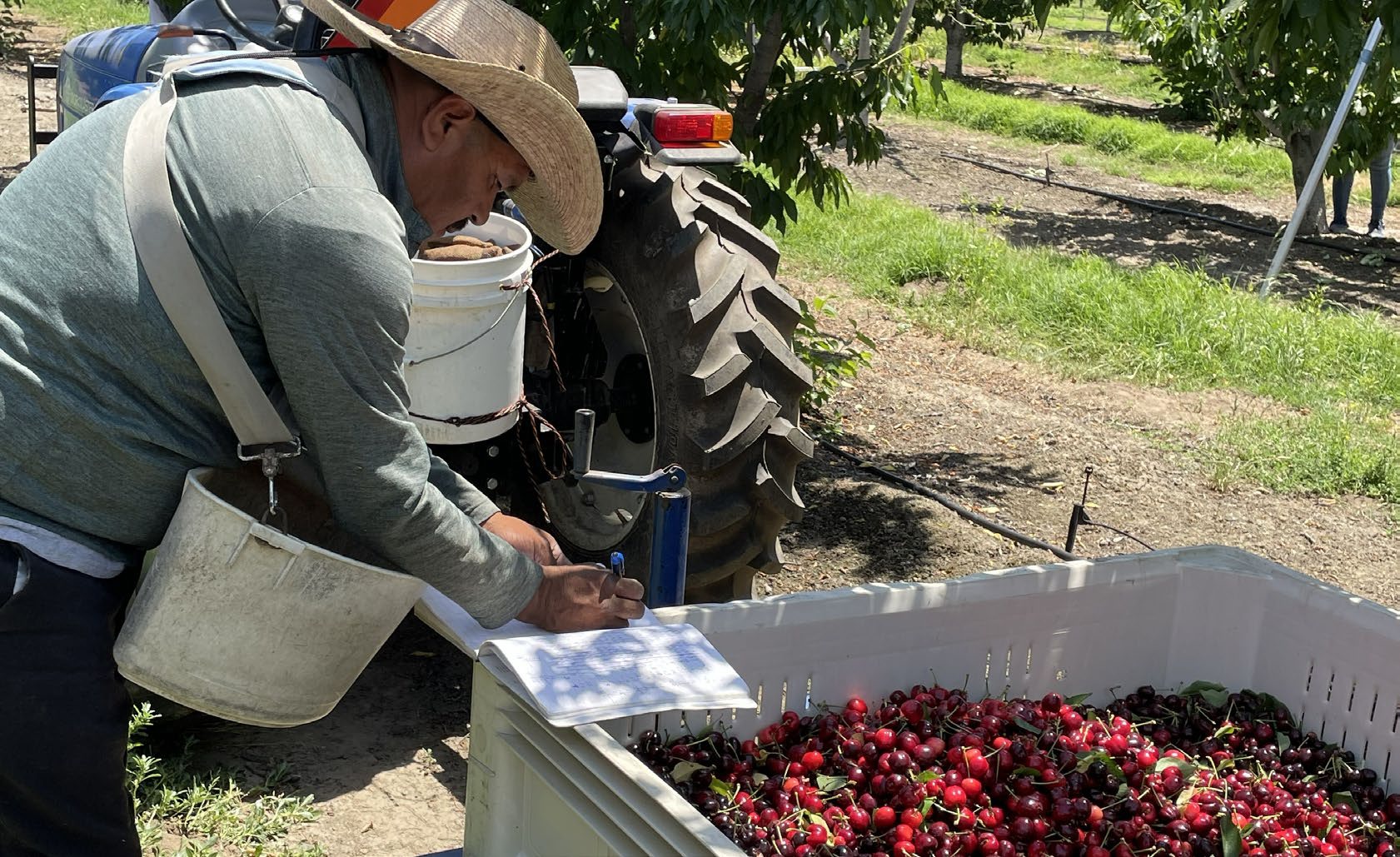
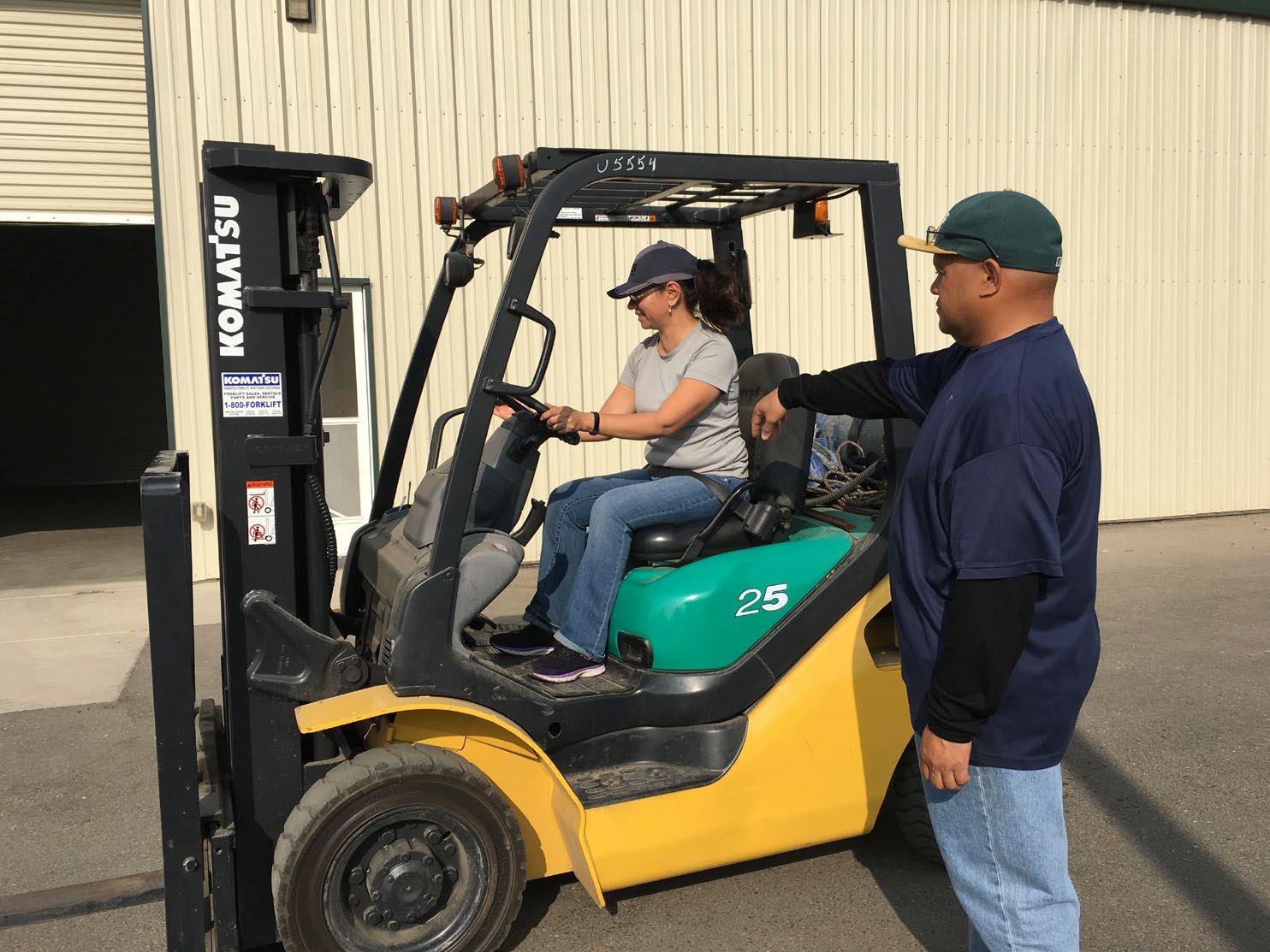
Agricultural employees often wear multiple hats. During harvest, one worker may drive a tractor, supervise a crew and haul product in the same day. DOL’s methodology considers the duties an employee performs most often, not the job title. A Washington orchard, for example, may hire pickers alongside workers running harvest platforms and forklifts; those roles should not share a classification. Similarly, a vegetable operation's crew leaders, who coordinate schedules and handle quality control, will need a different classification than general field labor.
Job Titles Don't Determine Compliance
A title on an application does not establish compliance. Calling someone a “general farmworker” may be inaccurate if the employee primarily runs specialized equipment or maintains irrigation systems. Job descriptions and SOC codes should reflect those primary duties.
What Misclassification Actually Costs
Misclassification isn't a paperwork technicality, it carries real financial exposure, and agriculture is a consistent DOL enforcement priority. Recent H-2A cases show how fast the numbers add up: a Nevada onion grower paid $2,338,700 in back wages to 1,365 workers plus a $500,000 civil penalty; an Alabama tomato operation paid over $18,000 after underpaying domestic workers relative to its H-2A crew, a corresponding-employment violation.
Exposure tends to compound: FLSA back wages recoverable for up to three years if willful, civil penalties that can exceed $2,000 per violation, state penalties that can add $5,000 to more than $25,000 per violation, and unpaid payroll taxes. For H-2A employers, willful or repeat violations can also jeopardize standing in the program itself, a risk that often outweighs the back wages from any single finding.
Annual Reviews and Your Domestic Workforce
Wage and classification reviews deserve the same annual attention as safety and compensation programs, because new equipment, automation, expanded crops or cross-training can all shift job duties without anyone updating the description. Employers should also review corresponding employment: when domestic workers perform substantially the same job as H-2A workers, they must receive the same applicable wage. For farm labor contractors, the annual update affects bonding too, since DOL uses the average AEWR to calculate required bond amounts, worth reviewing each year rather than waiting for license renewal.
Why the Stakes Are Higher for Larger Operations
For larger growers, compliance risk does not just scale with size, it compounds:
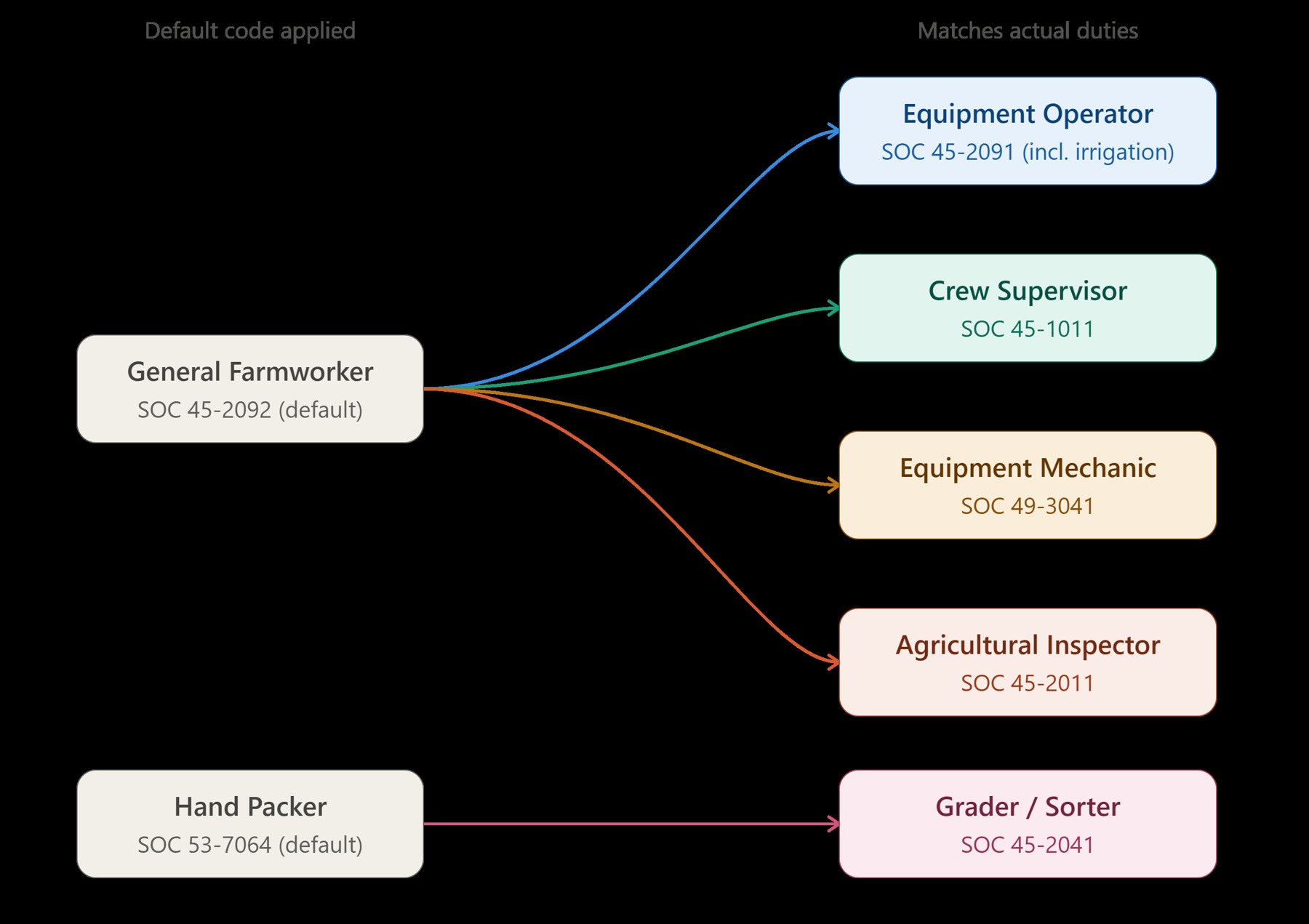
More classifications, more room for error. A single misapplied SOC code doesn't cause one wage mistake; it applies to every worker under that job order, which is why enforcement cases involve thousands of workers at once.
Multistate footprints create a compliance patchwork. AEWRs are set state by state, and litigation over DOL's methodology has at times applied unevenly, leaving multisite operations to track different rules by location.
Headcount multiplies exposure faster than it multiplies risk. Back wages and penalties are calculated per worker and per violation, so a manageable error at a 20-worker operation can become a seven-figure liability at 500 workers.
FLC relationships extend liability. Enforcement actions often name both the contractor and the grower who used its crews; joint employer findings can reach the operation that benefited from the labor.
Audit and reputational visibility are higher. Larger growers are more likely to face retailer or processor supply-chain compliance requirements, turning an enforcement action into a customer relationship issue.
Program access is a continuity risk. For operations that depend heavily on H-2A labor, willful or repeat violations that threaten program eligibility can put next season's labor supply at risk, not just create a bill.
None of this means larger operations are inherently riskier employers. It means the cost of an undetected error is higher, and compliance systems need to scale with the size and complexity of the workforce.
Six Steps Every Agricultural Employer Should Take Today
1. Download the current AEWR tables. Ensure payroll, HR, and recruitment staff are using the latest wage information.
2. Review every job description. Confirm each position reflects primary duties instead of copying prior-year language.
3. Verify occupation codes. Ensure each position aligns with the appropriate SOC code used in the H-2A application.
4. Review active payroll. Make required wage adjustments promptly if the updated AEWR affects current contracts.
5. Evaluate corresponding employment. Review wages for domestic employees performing substantially the same work.
6. Review bond requirements. FLCs should confirm whether updated average AEWR calculations affect required bonds.
Compliance Is Good Business
Most agricultural employers aren't trying to cut corners, they're trying to grow crops, manage labor shortages, and stay profitable. But as the H-2A program evolves, compliance expectations are becoming more detailed. The 2026 AEWR update reinforces an important reality: Job classification is a wage decision, not just paperwork. Reviewing classifications now can help employers avoid compliance problems and focus on running their operations.
AgSafe is a nonprofit 501(c)(3) organization (EIN 68-0259724) established in 1991 and recognized as an educational leader in agricultural safety, human resources and leadership development. The organization provides training, education, and practical tools to support agricultural employers, supervisors, and workers in promoting safe workplaces, regulatory compliance, and effective leadership practices. Headquartered in California, AgSafe delivers programs nationwide, including Hawaii and the Pacific Islands, through in-person instruction, virtual learning, and partnerships with industry organizations. Agricultural employers and those seeking additional information about AgSafe and its services can visit www.agsafe.org, email safeinfo@agsafe.org or call 209-526-4400.