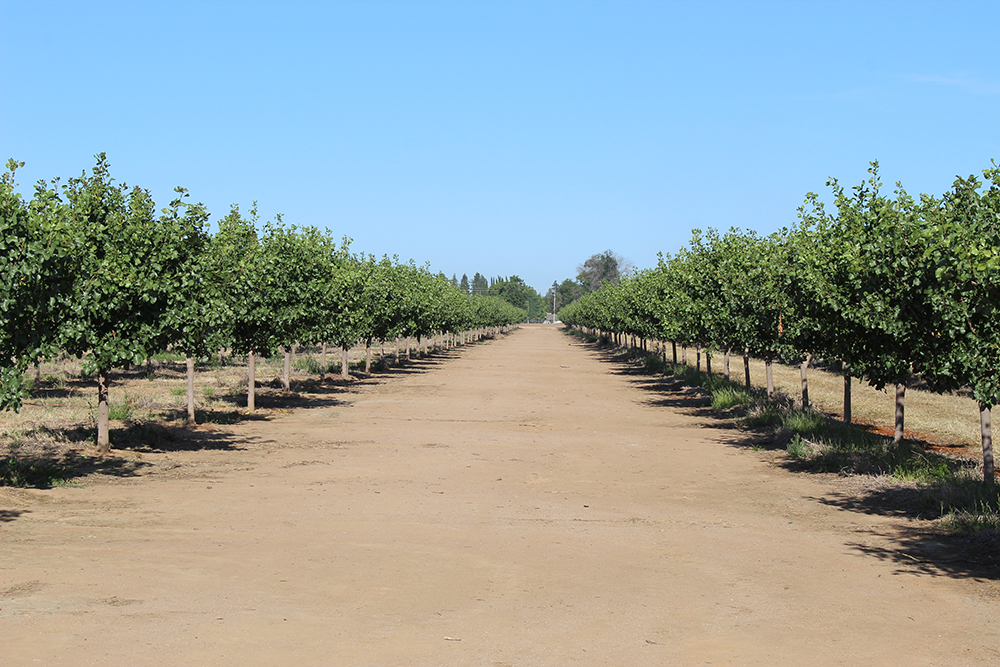
Managing thousands of acres requires disciplined scouting, smart harvest sequencing and enough people to keep pace with August pressures
Large tree nut operations face a version of the same August pressures as smaller growers: navel orangeworm, hull rot, irrigation timing, but multiplied across acreage that can’t always be walked block by block.
I’ve spent 45 years in the field, and in my experience, the fundamentals don’t change with scale. What changes is whether an operation has the people to keep up.
If you can’t get around to all of your sites every week, you need to start hiring more people.
Monitoring at Scale
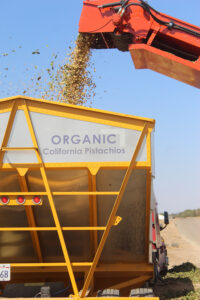
If I had a single day to assess a large operation’s pest and nutrition program, pest management would come first. Walking fields for pest pressure naturally surfaces nutritional information along the way, and by August, there’s limited room left to change nutrition management for the current season anyway. What field observations can do is set direction for next year.
I’m direct with growers about what large-acreage monitoring requires: coverage of every region of the operation, not a sampling of favored blocks.
If you’ve got a thousand acres, you’ve got to look at every region of your farm, at least.
My standard for operations that can’t manage that is simple. If you can’t get around to all of your sites every week, you need to start hiring more people.
The biggest risk I see specific to large operations isn’t a pest or a disease, it’s isolation.
The biggest risk I see specific to large operations isn’t a pest or a disease, it’s isolation.
Gary Osteen
Big growers tend to focus almost exclusively on their own ground, which limits their exposure to management techniques and problems showing up elsewhere.
Their management practices are probably their biggest problem. They’re limited to what they know and do. They don’t know what everybody else is doing.
For an operation managing thousands of acres, that narrowed field of view can mean missing a solution or a warning sign that a neighboring operation already worked through.
Harvest Timing Is Critical
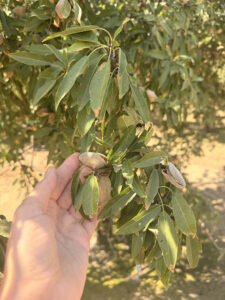
With harvest windows compressing this year, the priority for large operations is identifying which blocks are ready to harvest first and which will hold longer, then building an equipment plan around that sequence.
Getting to ready blocks quickly matters more than usual this season, given the pest pressure building behind a later-than-ideal start.
The costliest August decision I see for large operations is late harvest.
Every week a ready block sits unharvested is another week of exposure to navel orangeworm, in both almonds and pistachios, and rising populations compound the risk.
Gary Osteen
Every week a ready block sits unharvested is another week of exposure to navel orangeworm, in both almonds and pistachios, and rising populations compound the risk.
Operations that lag behind neighboring ranches risk becoming the last uncut block left standing and inheriting pest pressure that would otherwise have dispersed.
My approach to large-scale consulting traces back to a preference that has defined my entire 45-year career: being physically present in the field.
I talk to my growers by phone nearly every day, even when weeks pass between in-person visits.
The most important thing I feel I can do is inspect fields.
Gary Osteen can be reached at gwosteen@aol.com or at (661) 333-5551.
Publisher’s Take
The Big Picture: What to do Next
1. Cover every region of your operation
Don’t rely on a few familiar blocks. Effective scouting means evaluating every part of the ranch to identify developing issues before they spread.
2. Prioritize pest monitoring first
In August, pest pressure can change quickly. Focus scouting efforts on navel orangeworm and other late-season threats while noting nutritional observations for future planning.
3. Build harvest priorities now
Identify which blocks are ready to harvest and create a schedule that minimizes delays and reduces pest exposure.
4. Add scouting capacity if needed
If your team can’t visit every ranch or block weekly, consider adding personnel or outside support to maintain adequate field coverage.
5. Learn beyond your own operation
Stay connected with neighboring growers, PCAs and industry meetings to identify emerging issues and management practices before they become problems on your ranch.
Frequently asked
How often should large operations scout their acreage?
If you can’t get around to all of your sites every week, you need to start hiring more people.
What should be prioritized during August scouting?
If I had a single day to assess a large operation’s pest and nutrition program, pest management would come first. Walking fields for pest pressure naturally surfaces nutritional information along the way, and by August, there’s limited room left to change nutrition management for the current season anyway.