From the November 2026 digital edition · Read on magazine page 16
Listen to this article (10 min)
Watch the video version (10 min, the story’s slides with the narration)
Stand in an apple orchard during harvest and ask a grower what keeps them up at night. You will hear about labor: whether the crew will come back next season, whether H-2A timing will work out, what wages will look like in five years. Increasingly, you will also hear about machines. Will the fruit counter be accurate enough to plan harvest and contracts around? Will platforms pay for themselves? Is a robotic harvester three years away, or thirty?
For tree fruit operations, automation is not simply a technology question. It is a capital planning problem. A platform fleet or a sensing system is a major investment made against assumptions about how work will get done and who will do it. When those assumptions turn out to be wrong, expensive equipment ends up parked at the edge of the block.
That reality sits at the center of research our team at UC Davis recently published in New Technology, Work and Employment. Between 2023 and 2025, we followed 16 tree fruit operations across California and Washington, ranging from 200 to more than 5,000 acres. Our team spent 25 weeks working alongside crews, riding platforms and joining troubleshooting sessions when machines broke down. We also interviewed 165 owners, managers, crew leads and workers. Much of the conversation around AgTech assumes technical capability decides which tools succeed. Across fruit counting, orchard platforms and robotic harvesters, the strongest pattern we found was simpler. Technology worked when experienced people were positioned to interpret, correct and adapt it. It struggled when it was introduced as a way around them.
The Value of Human Experience
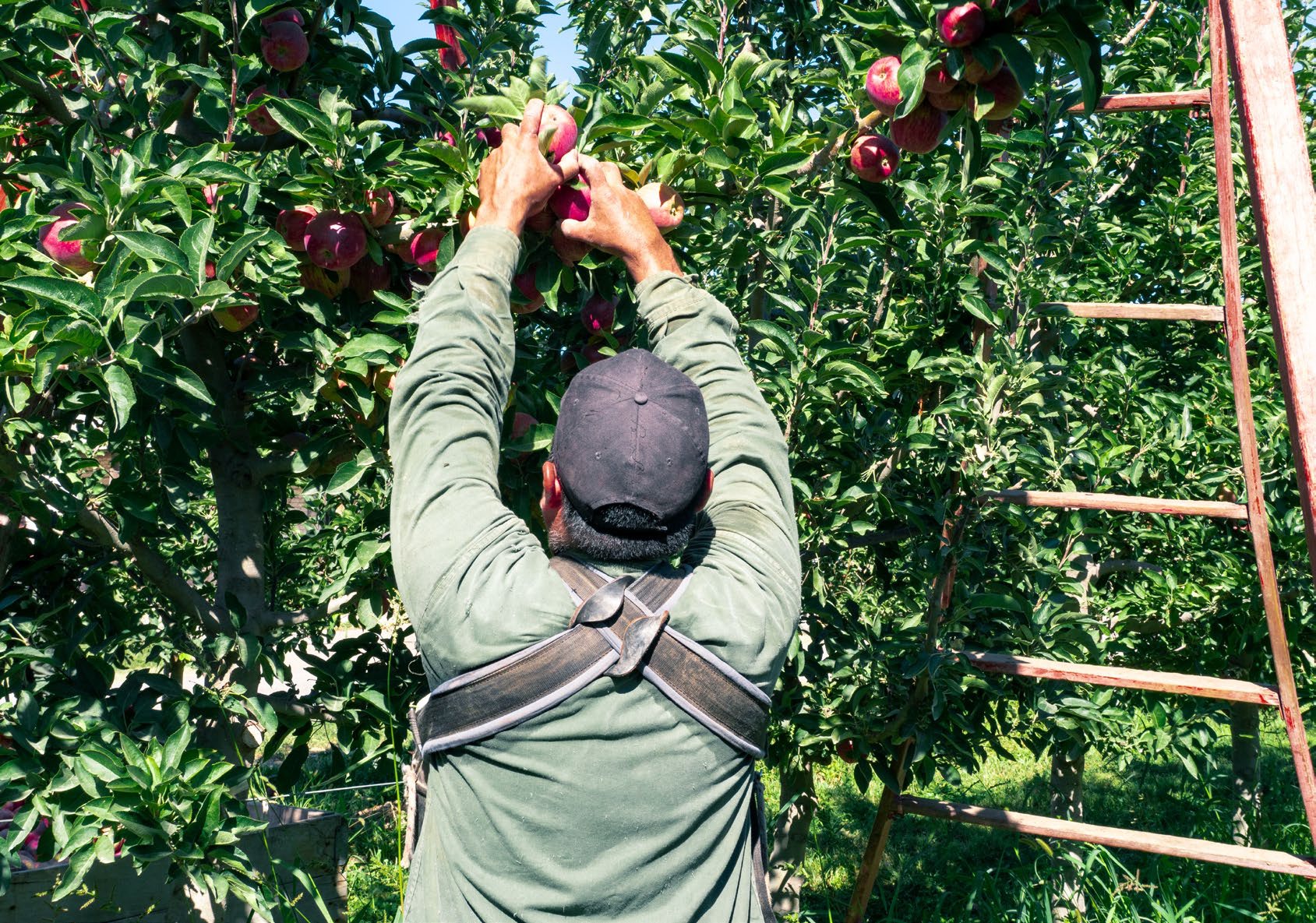
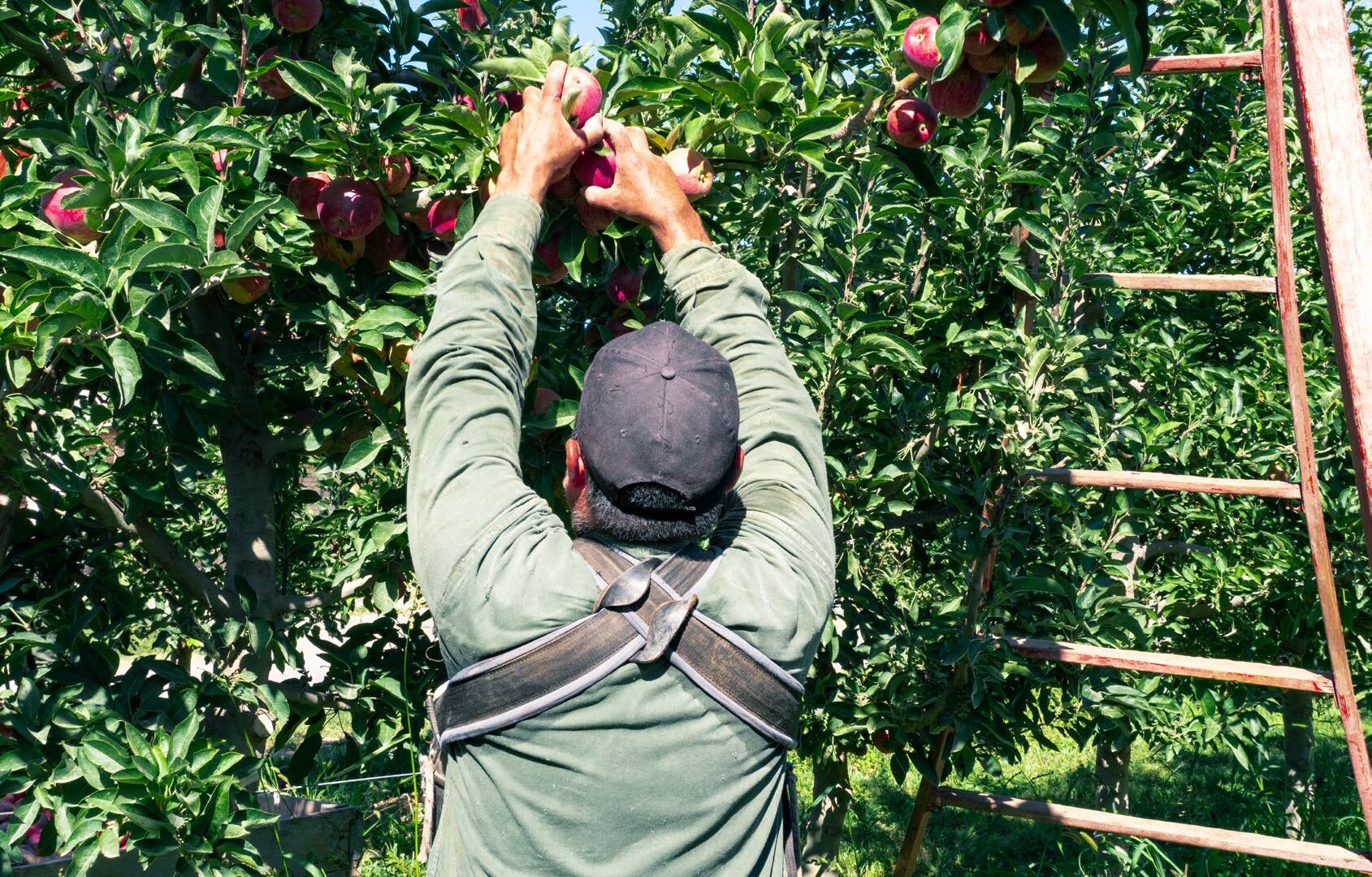
On one apple orchard, we compared an 18-year picker’s pick-or-leave decisions with a fruit-maturity sensor the farm was testing. Over 200 apples, they agreed 76% of the time. When they disagreed, the orchard manager sided with the picker in all but three cases. The sensor measured two or three variables. The picker, in the manager’s words, was integrating “maybe twenty”: sun exposure, how the tree had performed all season, a cold snap back in May.
We call this kind of work human middleware. It is the skilled, often invisible labor that keeps autonomous systems functioning in an environment as variable as an orchard. We saw it everywhere. On another ranch, an automated counting system projected 420 bins for a block. The ranch manager adjusted that to 385 based on spring pollination and tree vigor, and landed within 2% of the actual harvest. The system made him better informed, but the call, and the accountability for it, remained his.
Why Implementation Matters
Orchard platforms showed how much the method of introduction matters. On one operation, platforms were chosen and rolled out without consulting the crew. Workers repeatedly flagged that the machines could not handle the orchard’s row spacing, and the system was eventually abandoned. On another, a committee of managers, crew leads and workers piloted three platform models before purchase. The workers rejected management’s preferred model because sightlines and ease of use mattered more to productivity than its technical specifications. The farm followed their recommendation. Worker-driven changes to deck layout and training followed, and productivity rose. It was the same category of machine, with opposite outcomes.
Robotic harvesters, the most ambitious goal in tree fruit automation, remained largely experimental across our study. One manager calculated that the harvester his operation was testing ran at less than one-third the speed of a human crew with double the cull rate. He judged it economically unviable even after accounting for labor savings. Many growers still see robotic harvest as a real long-term possibility, but most likely one with people kept in the loop.
That finding matters because it reframes a central assumption in the automation conversation. Labor shortages are often treated as an engineering problem: identify the bottleneck and design it out. Better machines matter enormously. But our findings suggest adoption depends as much on how technology is introduced as on what it can do.
At the same time, growers face real pressure. One orchard manager told us some seasons they lose up to 40% of the previous year’s crew to almonds, construction or visa timing. Add compliance requirements that favor data that is “documentable and defensible,” and an industry culture that increasingly rewards looking innovative, and it is easy to see why automation looks like a way to reduce dependence on experience that keeps walking out the door. Yet experience still mattered. On one orchard, when seven veteran crew members fell ill for several weeks, the remaining crew fell 30% behind schedule, even with a platform system meant to simplify the work.
Finding a Middle Ground
Some operations are already finding a workable middle path. One farm moved from ladder to platform harvest over three seasons through attrition rather than layoffs. Workers who stayed moved into platform jobs paying roughly 15% to 25% more, and new hires started on ladders to learn to read target fruit first. Other operations paired veterans with newer workers in formal mentorship programs. Some evaluated new tools collectively through industry research commissions and university test orchards, and one farm brought its system operator, orchard manager and vendor together after the season to work out why a yield forecast missed. Different approaches, same principle: technology works best when the people who run it are treated as partners in its design rather than obstacles to it.
The broader lesson is straightforward. The work of keeping these systems running is more demanding and more site-specific than the work it replaces, yet it is often still paid as unskilled labor. That leaves a retention risk sitting directly beneath a capital investment. Many of the farms we studied had already begun adjusting pay structures to address it.
Protecting the Investment
For owners and executives, worker input before purchase is not a courtesy. It is due diligence. Piloting equipment with the people who will operate it, budgeting for the human oversight a system will need, and building pay steps for tech-skilled roles protect the investment itself.
For technology developers, the orchard is not a factory floor. Tools designed from the start for human interpretation and correction are more likely to survive their first season than tools designed to eliminate it.
For industry organizations and policymakers, shared testing infrastructure deserves serious attention. Where growers had access to collaborative research networks, they could evaluate technology collectively before betting on it alone. It is also worth asking whether compliance frameworks unintentionally discount the judgment of experienced workers simply because it is harder to document.
The growers and workers who opened their gates to us were not resisting technology. As one manager put it, “We aren’t luddites.” They were asking for technology that works in a real orchard: tools that respect operational realities, build on the knowledge already in the rows, and reward the people who make them perform.
West Coast agriculture has absorbed every wave of mechanization that came before. The farm of the future is being negotiated now, block by block. Its success may depend not only on what the machines can do, but on whether the people who make them work have a seat at the table.
M. Anne Visser, Ph.D., is a professor of community and regional development in the College of Agriculture at UC Davis. Her research examines how economic change, automation and AI are reshaping agricultural work and regional economies. She co-directs UC’s Labor and Automation in California Agriculture Multi-Campus Research Initiative and serves on the USDA’s multistate research program on Sustainable and Resilient Systems: Transformative Response to Disruptions by Agricultural Businesses and Communities.
To read the full paper, visit https://onlinelibrary.wiley.com/doi/epdf/10.1111/ntwe.70047